To the Glossary
Strabismus (Crossed Eyes)
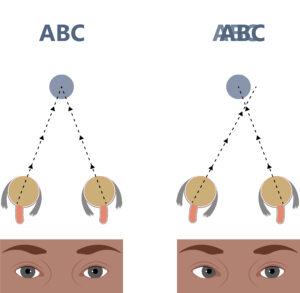
Strabismus, also called eye misalignment in medical terminology, describes an eye condition in which the eyes are not aligned parallel to each other. This results in the eyes not looking at the same point simultaneously, which can lead to impaired visual perception.
Causes of Strabismus
The causes of strabismus can be varied and include problems with the eye muscles, the nerves that control the eyes, as well as congenital factors or acquired conditions. It can also occur due to refractive errors such as farsightedness or nearsightedness. More information on the various causes of strabismus can be found in this article.
Types of Strabismus
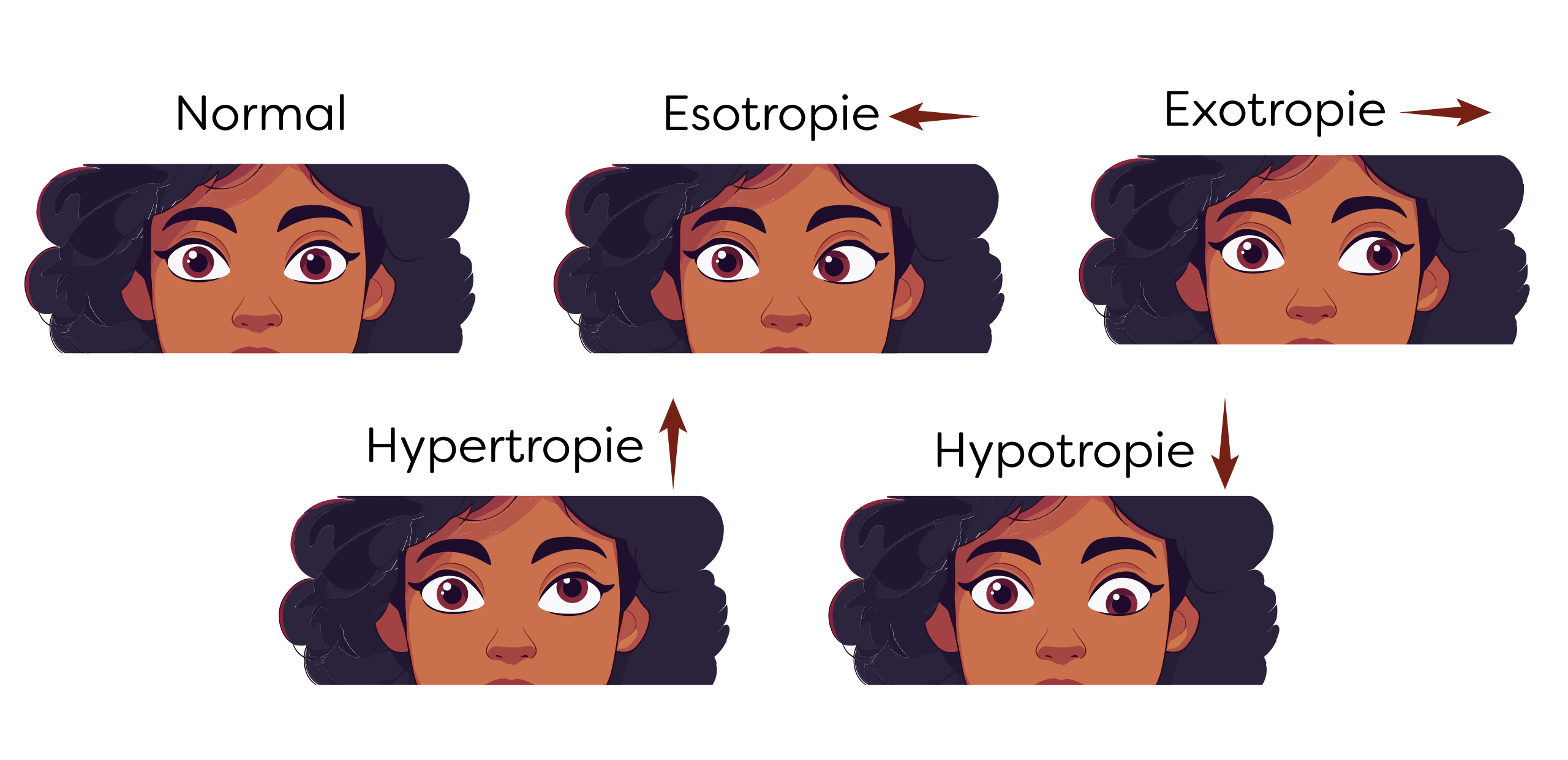
There are various types of strabismus, including:
- Esotropia: One eye turns inward.
- Exotropia: One eye turns outward.
- Hypertropia: One eye turns upward.
- Hypotropia: One eye turns downward.
Symptoms
The most common symptoms include:
- Double Vision or Blurred Vision: The different positioning of the eyes causes the brain to receive two different images.
- Headaches Including Migraines: Attempting to compensate for the misalignment can lead to overexertion and headaches.
- Reduced Depth Perception: There are difficulties in assessing distances and spatial relationships.
- Social Limitation: The visible deviation of one or both eyes can be socially and emotionally distressing.
Impaired Visual Development
- Amblyopia: If strabismus occurs in childhood, the brain suppresses the second image. This hinders the squinting eye in its visual development. Unrecognized or inadequately treated amblyopia leads to lifelong limited vision.
- Reduced Binocular Vision: When both eyes do not look in the same direction simultaneously, the affected child has no opportunity to develop binocular vision.
Treatment Options
Treatment options for strabismus include: