
Children sometimes need glasses for different reasons than adults. In the early years of life (up to about age 12), vision development takes place, similar to the development of language and motor skills.
Wearing glasses is essential for the visual development of some children. The main reasons a child may need glasses are:
Improving visual acuity
Wearing glasses can improve sharpness of vision and help your child better navigate their surroundings.
Improving eye alignment
Some glasses help children keep their eyes properly aligned.
Reducing or preventing amblyopia
Wearing glasses can help prevent amblyopia (lazy eye). If amblyopia is already present, the glasses can help further improve visual acuity.
Protecting one eye
Glasses can also be used to protect the better-seeing eye from injury when the other eye has poor vision.
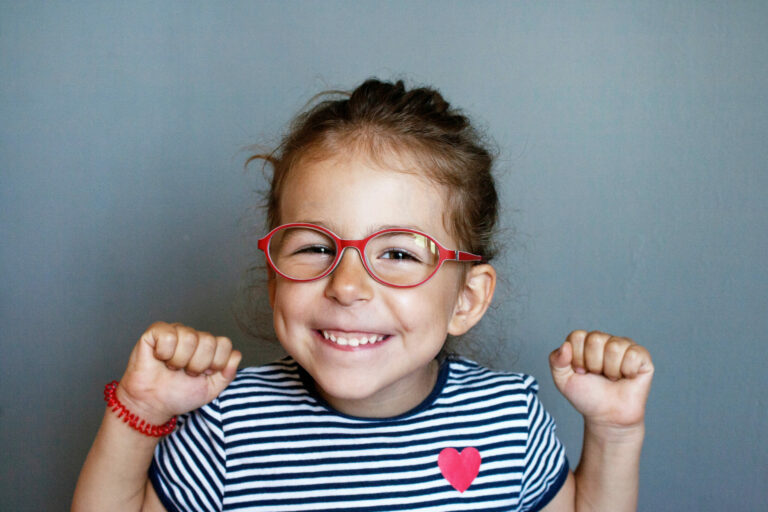
Even with glasses, your child should still be able to be a child. Glasses should not restrict them, so they should be above all comfortable. Your child will be wearing them all day while exploring the world.
For younger and more active children, a sturdy frame is important. Special materials such as Titanflex® or Siliflex® can greatly improve durability. Regular adjustments at an optical store help maintain comfort.
Larger lenses not only help your child adapt to glasses more quickly but also expand the field of vision.
It’s best to get advice from your local optical shop.
Plastic lenses are recommended for children’s glasses because they are shatterproof and lightweight. Most lenses already have built-in UV protection.
An additional coating can improve scratch resistance, increasing the glasses’ lifespan.
An anti-reflective coating reduces bothersome reflections on the lenses so that, for example, your child’s eyes are clearly visible in photos.
Optionally, materials can be chosen to make the lenses thinner.
Baby and toddler glasses should be sturdy and made from flexible material so they can withstand naps or emotional outbursts.
Some of these glasses come with a strap so the fit can be adjusted to your child’s needs.
When not in use, glasses should be stored in a case. Never place glasses with the lenses facing down, as this can scratch the surface.
Lenses should be cleaned with a little dish soap under lukewarm water, and the arms can be cleaned at the same time. The best way to dry glasses is with a fine cotton or microfiber cloth.
Cleaning lenses without water, for example with a T-shirt, can cause tiny, invisible scratches on the lens surface and damage the coatings.
Regular adjustment and deep cleaning at an optical shop help maintain comfort and extend the glasses’ lifespan.
Children’s glasses tend to get dirty more often than adults’ glasses, but this usually has little impact on vision. Clean them once a day and/or when they are heavily soiled.
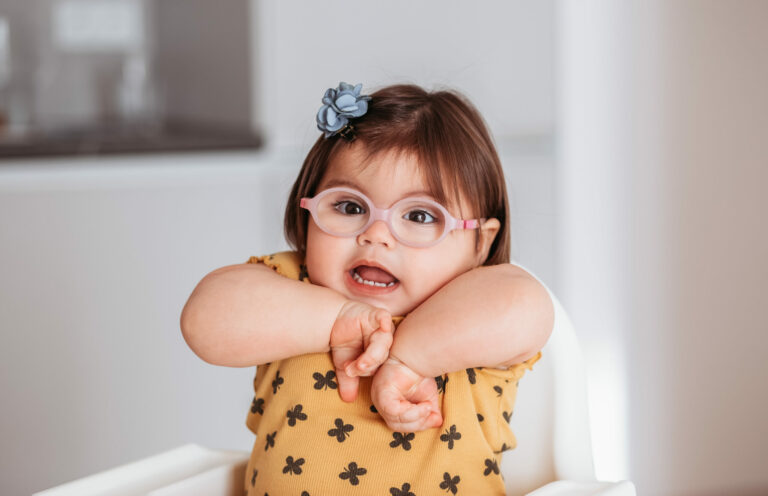
If glasses improve vision, most young children will accept them quickly. Check with your eye care professional whether your child should wear them all the time or only for certain activities, such as at school.
Some children enjoy wearing glasses right away, while others need time to adjust. It’s very important for parents to maintain a positive attitude and encourage their child to wear them.
If your child still cannot get used to the glasses after a few weeks, the eye doctor may need to review the prescription. If your child still resists wearing glasses, the doctor may prescribe eye drops to help with adaptation.
Please contact your eye care professional if you have any questions or need further information.