
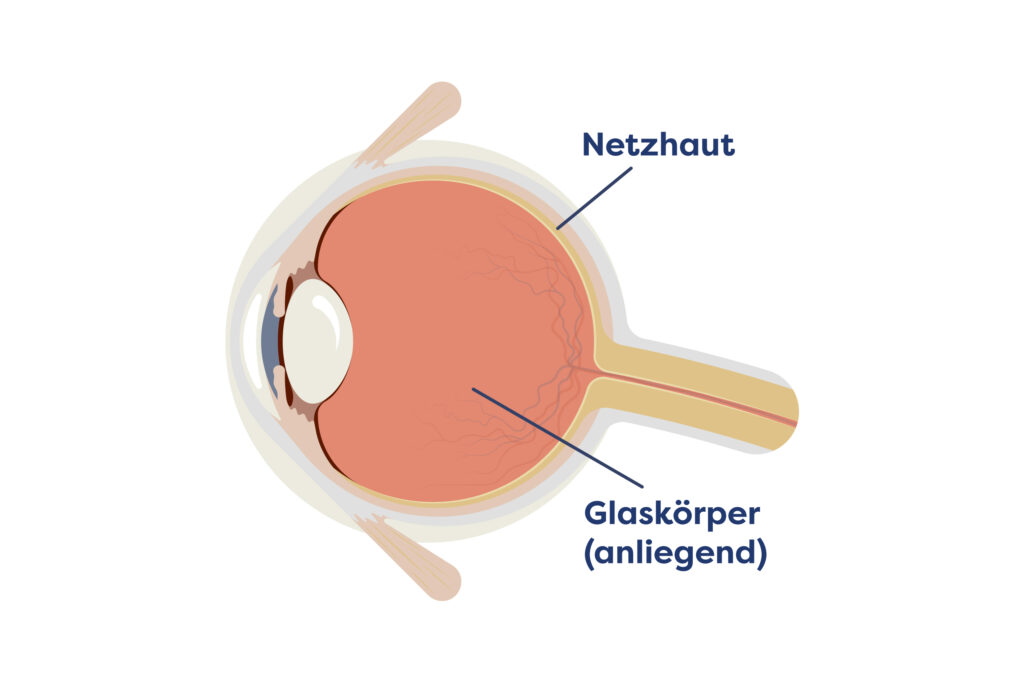
The vitreous is a gel-like substance that fills the inside of the eye. In children and young adults, the vitreous is slightly thicker and completely fills the posterior chamber of the eye, lying directly against the retina.
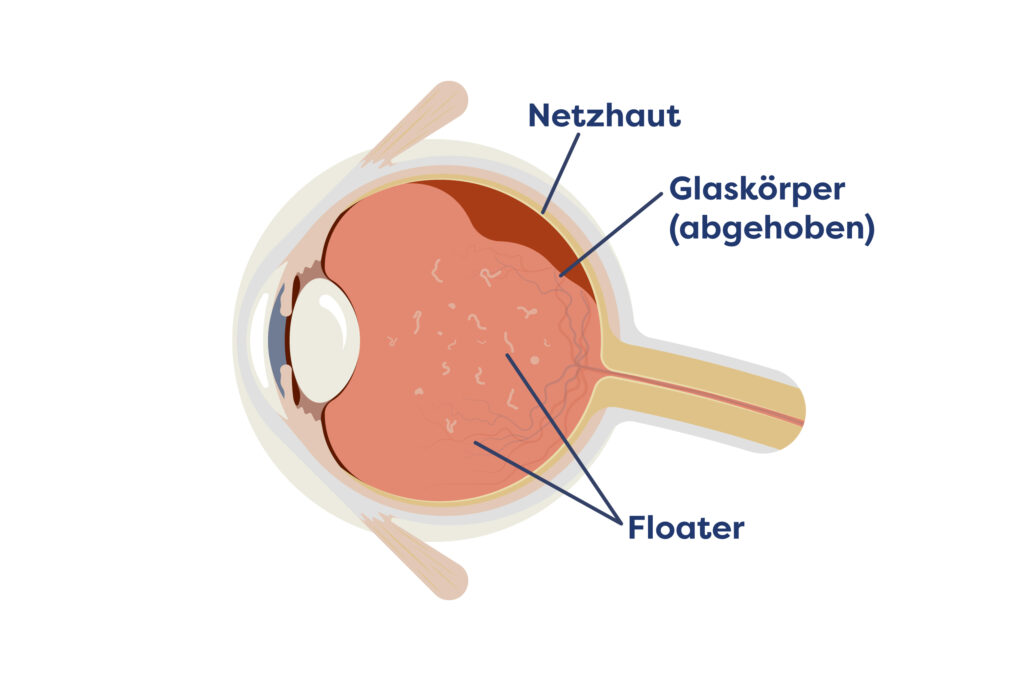
Over the course of life, the composition of the vitreous changes, and it begins to separate from the back of the eye (the retina). This natural process occurs more frequently or at an earlier age:

At the time of vitreous detachment, flashes of light (photopsia) and an increased perception of floaters (mouches volantes) may occur.
Although vitreous detachment is a normal physiological event, complications such as retinal tears can occur during the process.
For this reason, it is important to have the retina examined during a vitreous detachment so that any retinal tears can be detected and treated before a retinal detachment develops.