
A chalazion is a lump in the eyelid that develops when one of the small oil glands (Meibomian glands) at the eyelid margin becomes blocked. A chalazion can cause swelling, redness, and sometimes pain in the affected eyelid. If there is also a localized infection, it is called a hordeolum (stye). The two terms are often used interchangeably. In everyday language, a chalazion is sometimes referred to as a “hailstone,” and in Swiss German as a Gritli.
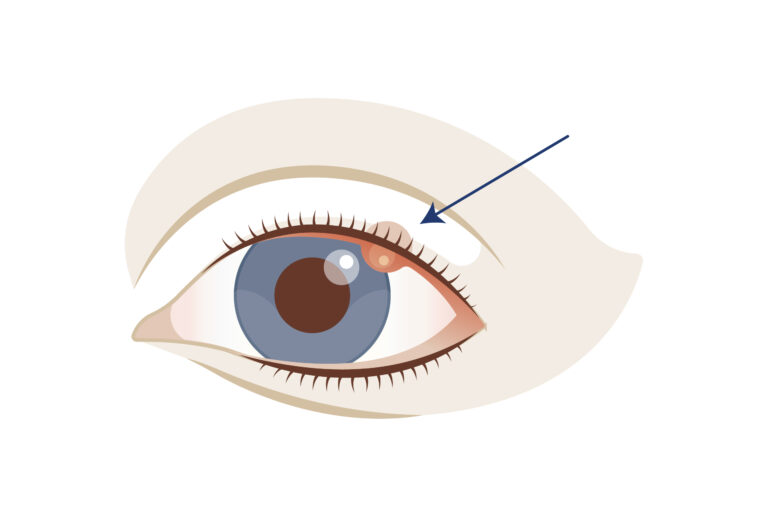
A blockage of the Meibomian glands, which produce the oil needed to lubricate the eye, leads to chalazia. The accumulation of oil forms the visible lump.
The exact cause of chalazia is often unclear, but factors such as blepharitis (inflammation of the eyelid margins) or inflammatory skin conditions like rosacea can contribute to their development. In contrast, hordeola can also arise from infections of the Zeis or Moll glands.
In many cases, chalazia resolve on their own. The process can be sped up by applying warm compresses, which help open the blocked gland. Medications may be used if needed. In rare cases, particularly when a chalazion is large or causes discomfort, surgical removal may be necessary.
Regular cleaning of the eyelid margins can help prevent chalazia. This includes daily cleaning of the eyelids with special lid-cleaning solutions or gentle shampoos. Consuming omega-3 fatty acids, either through diet or as supplements, can also help reduce eyelid inflammation and keep the oily secretions of the Meibomian glands in a fluid state.